Building a Home Herbal Remedy Cabinet: A Research Librarian's No-BS Guide

I didn't start this blog to sell you things. I started it because I watched a "liver detox" recipe go viral with enough pennyroyal in it to cause a miscarriage, and I realized the internet is a genuinely dangerous place for people who just want to feel better.
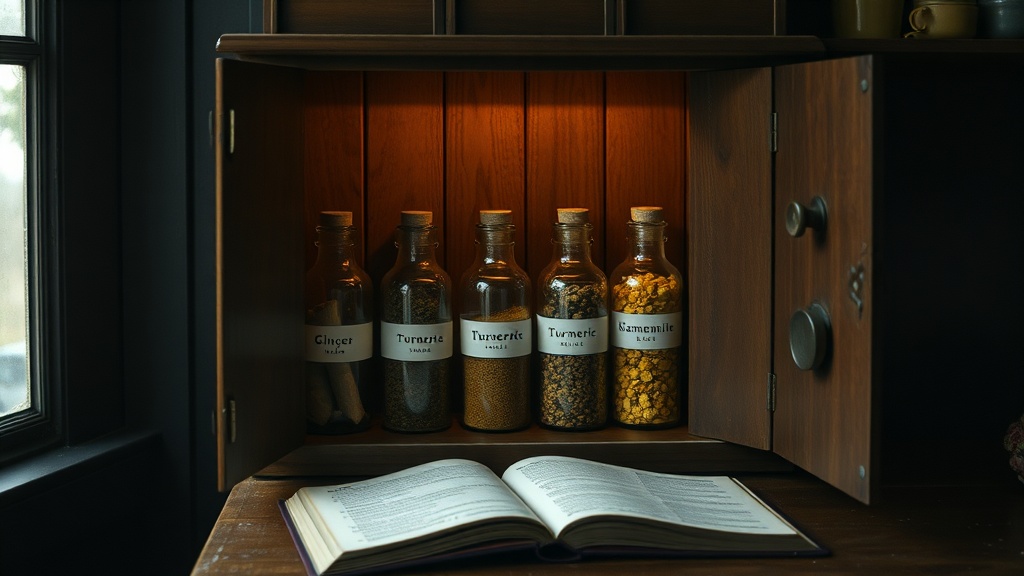
So let's talk about building a home herbal remedy cabinet — not the Pinterest version where you have forty labeled glass jars and zero idea what any of them do, but the librarian version: small, deliberate, indexed, and actually useful.
Why a Cabinet Instead of a Supplement Drawer
Here's the cost math nobody talks about. A good quality dried herb bought in bulk — think Mountain Rose Herbs or your local co-op — typically runs a fraction of the equivalent encapsulated product. (Prices shift; check current bulk pricing before you plan a budget.) The same herb, once it's been extracted, standardized, encapsulated, labeled with a stock photo of a sunset, and shelved next to a celebrity endorsement, can run $35–$60 for a month's supply. You're paying for the marketing. The plant is the plant.
Beyond cost: waste reduction. That bottle of "Immune Boost Complex" you took twice in 2023? Still in your medicine cabinet, expired, eight herbs you can't pronounce. A cabinet built around dried single herbs you actually use doesn't accumulate like that.
And the self-sufficiency piece — not in a prepper sense, but in the sense that you know what you have, what it does, and when it's appropriate. That knowledge is worth more than any product.
The 8 Core Herbs (With Evidence, Not Magic)
I'm going to give you my list. This isn't the only valid list. A herbalist in Appalachia would build differently than someone in coastal Oregon. But these are the herbs with the broadest evidence base, the most accessible sourcing, and the widest range of everyday applications.
1. Ginger (Zingiber officinale)
One of the most studied anti-emetics in botanical medicine, with hundreds of peer-reviewed studies. The active compounds — gingerols and shogaols — inhibit 5-HT3 receptors (the same pathway as some prescription anti-nausea drugs) and have a well-documented anti-inflammatory effect via COX-2 inhibition. For pregnancy nausea, it's the herb most OBs will actually sign off on, and the evidence here is genuinely strong across multiple RCTs.
For motion sickness, the picture is more mixed. Some trials show meaningful benefit over placebo; others don't, and effect sizes vary considerably. The 2005 Cochrane-adjacent meta-analyses found inconsistent results for motion sickness specifically, even where the pregnancy nausea evidence held up. My read: worth trying, mechanistically plausible, but don't treat it as a lock the way the pregnancy nausea data is.
Keep it as: dried sliced root (decoctions) or dried powder (teas, cooking). Fresh is great but doesn't store.
2. Turmeric (Curcuma longa)
The research here is real. Curcumin — turmeric's active constituent — has solid anti-inflammatory and antioxidant evidence, particularly around joint pain and gut inflammation. But here's the catch I want you to understand: curcumin is famously bioavailability-challenged. Taken alone, very little of it crosses your intestinal wall.
The fix isn't a proprietary "enhanced absorption formula" costing $70. It's black pepper. Piperine — the active compound in black pepper — has been shown to increase curcumin absorption substantially in pharmacokinetic studies — one frequently cited figure is around 2,000%, though the practical clinical implications of that number are still being worked out. Add black pepper to your turmeric when you use it. That's it. The catch is also the simplest possible fix.
Keep it as: dried powder.
3. Peppermint (Mentha × piperita)
Reliable evidence for digestive applications: IBS (multiple RCTs support enteric-coated peppermint oil for spasm — this is one of the stronger herbal datasets in GI medicine), indigestion, and nausea. Menthol's mechanism on smooth muscle relaxation in the GI tract is well-understood. For tension headaches, topical peppermint oil application shows genuine efficacy — a 1996 Göbel study found it comparable to acetaminophen in a small double-blind RCT, and the finding has held up in subsequent work.
One caution: if you have GERD, peppermint can relax the lower esophageal sphincter and worsen reflux. The same muscle-relaxing mechanism that helps with cramping can work against you at the wrong end of your digestive tract.
Keep it as: dried leaf for tea, essential oil for topical use.
4. Chamomile (Matricaria chamomilla)
Let me be honest with you about the effect sizes here. Chamomile for sleep and anxiety — the evidence is consistent, but modest. We're not talking about pharmaceutical-strength sedation. We're talking about a genuine, measurable reduction in anxiety scores and sleep latency in multiple RCTs, using effect sizes that you'd describe as "meaningful but not dramatic."
For a lot of people, that's exactly what they need. An herb that takes the edge off a hard day and helps you wind down without dependency risk isn't a trivial thing. I just want you to have calibrated expectations. If you're managing sleep through seasonal changes, chamomile pairs well with other gentle nervines.
Apigenin — chamomile's key flavonoid — binds GABA-A receptors, which is the same basic mechanism as benzodiazepines, just with much lower affinity. That's why it's gentle. That's not a failure; that's appropriate for mild situational anxiety.
Keep it as: dried flowers for tea.
5. Thyme (Thymus vulgaris)
This is the one people underestimate. Thyme has one of the more interesting traditional-plus-modern validation combinations in the herb cabinet. Thymol and carvacrol — its primary phenols — have documented antimicrobial activity in vitro and are reasonable candidates for expectorant properties based on mechanism. The German Commission E approved thyme preparations for upper respiratory catarrh and bronchitis — though it's worth understanding what that approval actually means: the Commission E evaluates traditional use plus available safety and efficacy data, not exclusively large RCTs. It's a meaningful signal, not a pharmaceutical-grade stamp.
For coughs, the traditional use case is plausible and the mechanistic support is there: thymol and carvacrol appear to stimulate bronchial secretions, and the antimicrobial activity is genuine at appropriate concentrations. European OTC cough preparations contain it for a reason. But I'd put the evidence quality here as "good traditional evidence, limited modern RCT data" rather than the same tier as peppermint-for-IBS. Keep expectations calibrated accordingly.
Keep it as: dried leaf.
6. Elderberry (Sambucus nigra)
I'm going to give you the honest gray-zone take here, because elderberry has become such a marketing darling that nuance has completely evaporated from the conversation.
Evidence for elderberry shortening cold duration exists — primarily the Zakay-Rones studies and the Tiralongo RCT, which showed meaningful reductions in symptom duration. But I want to flag some real limitations: the Zakay-Rones trials were small and have drawn criticism for methodology and funding conflicts; effect size estimates like "one to four days shorter" come from these limited trials and shouldn't be treated as settled science. The 2016 Tiralongo RCT (travelers' colds) was better designed and still showed benefit, but we're working with a thin literature overall.
The cytokine storm concern — that elderberry's immune stimulation could theoretically worsen severe inflammatory responses — is mechanistically plausible based on in vitro cytokine work, but has not been demonstrated in clinical populations. It remains theoretical.
My position: elderberry is a reasonable choice for healthy adults using it short-term for cold/flu symptom support, with honest acknowledgment that the evidence base is suggestive rather than definitive. If you're immunocompromised, on immunosuppressants, or managing an autoimmune condition, check with your doctor before using it regularly.
Keep it as: dried berries for decoctions or syrup (which you make yourself — the commercial syrups are largely sugar with a marketing label).
7. Valerian (Valeriana officinalis)
Yes, it smells like sweat socks that have been composting in a gym bag for six months. I'm not going to lie to you about that.
The sleep evidence for valerian is present — but it's messier than popular herbalism tends to admit. Multiple meta-analyses have found modest positive effects on sleep latency and subjective quality, but the trials are heterogeneous in quality, preparation standardization is inconsistent across studies, and some reviews conclude the evidence is insufficient to make firm claims. My honest summary: there's a real signal here, it's not imaginary, but "consistent across multiple meta-analyses" would be overstating it — more accurate is "a pattern of modest benefit in a methodologically uneven literature." Valerenic acid appears to inhibit GABA breakdown, which provides a plausible mechanism, but the full picture isn't settled.
Two things to know: First, valerian sometimes has a paradoxical stimulating effect in a subset of people. If you take it and feel wired rather than sleepy, you're in that group — it's not a bad batch. Second, and critically: do not combine valerian with prescription sedatives, benzodiazepines, or SSRIs without talking to your doctor first. The additive sedation risk is real and documented.
Keep it as: dried root for tea (if you can tolerate it) or tincture in vegetable glycerin to mask the smell.
8. Nettle (Urtica dioica)
Nettle is the underrated workhorse of the herb cabinet. Dense in iron, calcium, magnesium, and vitamin K. Reliable mild diuretic. Consistent evidence for reducing hay fever symptoms — freeze-dried preparations especially, where the histamine content of the plant itself appears to produce tolerance responses, though the mechanism isn't fully settled. Some evidence for reducing BPH-related urinary symptoms in men, though I'd flag that as supportive use alongside medical care, not standalone treatment.
I've written about nettle and iron before: it's a genuinely useful food-herb for supporting iron status alongside dietary sources, but it is not a standalone treatment for diagnosed iron-deficiency anemia. That distinction matters.
Keep it as: dried leaf for tea, freeze-dried capsules for seasonal allergies.
What NOT to Keep (And Why)
Echinacea — The evidence for cold prevention is genuinely weak. Multiple large RCTs have failed to replicate the effects seen in smaller studies. I know this is not what the wellness internet will tell you. I'm telling you anyway. If it works for you subjectively, fine, but it's not a cabinet essential on current evidence.
Goldenseal — Overused, overharvested (it's at-risk in the wild), and the antibacterial evidence is largely in vitro — meaning in a lab dish, not in a human body. The regulatory landscape around berberine-containing herbs is also complicated. Here's a deeper look at why goldenseal is trending. Not a home cabinet herb.
St. John's Wort — The efficacy evidence for mild-to-moderate depression is actually solid. This is genuinely one of the better-studied herbs in psychiatric applications. However: St. John's Wort is a significant inducer of cytochrome P450 enzymes, which means it can dramatically reduce the blood levels of dozens of common medications — including birth control pills, antiretrovirals, anticoagulants, and immunosuppressants. This isn't a reason to never use it; it's a reason not to use it without talking to your doctor if you're on any medications. For a home cabinet where you might reach for something without checking every time, it's too high-risk. Reserve it for intentional, supervised use.
Anything labeled "detox" — Your liver and kidneys detox you. That's what they are — organs that filter toxins. No herb is going to "support your liver's natural detox pathways" in any way that meaningfully changes what your liver already does, and some herbs marketed this way — pennyroyal, comfrey, pyrrolizidine alkaloid-containing plants — are genuinely hepatotoxic. "Detox" is a red flag. Full stop.
Storage: The Chemistry Actually Matters
Active compounds in herbs degrade. This is chemistry, not negligence, and it happens faster than most people realize.
Light breaks down aromatic compounds, flavonoids, and volatile oils. Keep herbs away from windows and out of those pretty countertop displays. Glass jars are fine; clear glass jars in full sun are not.
Heat degrades volatile oils faster than almost anything else. Don't store herbs near your stove or on top of your refrigerator (which vents heat from the compressor). A cool pantry shelf or a dedicated cabinet is ideal.
Moisture causes mold growth and degrades plant matter rapidly. Dried herbs need to stay dry. Don't store them near your stove, dishwasher, or kettle.
Label with the purchase or harvest date. Dried herbs have a general potency window that varies considerably by plant, part, and storage conditions — as a rough guideline, dried leaves and flowers often hold potency for one to two years under good conditions, while roots and bark can last somewhat longer. These are generalizations; the only real test is smell, color, and taste. After potency drops, they're not dangerous — just less effective. Knowing when you got them lets you use them intentionally.
Tinctures vs. dried: Tinctures (alcohol extracts) generally have longer shelf lives than dried herb — often three to five years under good conditions, though this varies by the alcohol percentage and the herb. They often achieve better extraction of certain constituents and are more convenient. The trade-off is cost (or time, if you make your own) and the alcohol content, which matters if you're avoiding it. Dried herbs for tea are fine for most applications; I keep both.
Infusions vs. decoctions: Infusion = pour boiling water over herbs, steep, drink. This is for leaves and flowers — chamomile, mint, nettle leaf. Decoction = simmer herbs in water for 20–45 minutes. This is for roots, bark, and seeds — ginger root, valerian root. The difference matters because delicate aromatic compounds in leaves are destroyed by prolonged heat, while the harder cell walls of roots need sustained heat to release their constituents.
The Hard Boundary
I need to say this plainly: herbal doesn't mean safe.
Ginger in therapeutic doses can enhance blood-thinning effects of warfarin and aspirin — relevant if you're on anticoagulants. Chamomile has documented cross-reactivity with ragweed, chrysanthemums, and other Asteraceae family plants — relevant for people with those allergies. Valerian plus SSRIs is not a casual combination. Nettle's vitamin K content matters if you're on warfarin.
None of this means the herbs aren't useful. It means they're pharmacologically active, which is the whole point, and pharmacologically active substances interact with bodies and other substances in ways that matter.
And this: taking an antibiotic for a bacterial infection is not a failure of your herbal practice. Seeing a doctor for symptoms that are persistent, worsening, or outside your competency to assess is not abandoning your values. The herbs in this cabinet are for support — for common everyday ailments, for the gap between "fine" and "needs medical attention." They are not a replacement for diagnosis.
I spent three years learning from a clinical herbalist who said something I've never forgotten: "The most dangerous herbalist is the one who's afraid of hospitals."
Build the cabinet. Learn the plants. Know when to put the tea down and pick up the phone.
Have a question about a specific herb or storage situation? Drop it in the comments. I read everything, and if I don't know the answer, I'll tell you that instead of making something up.