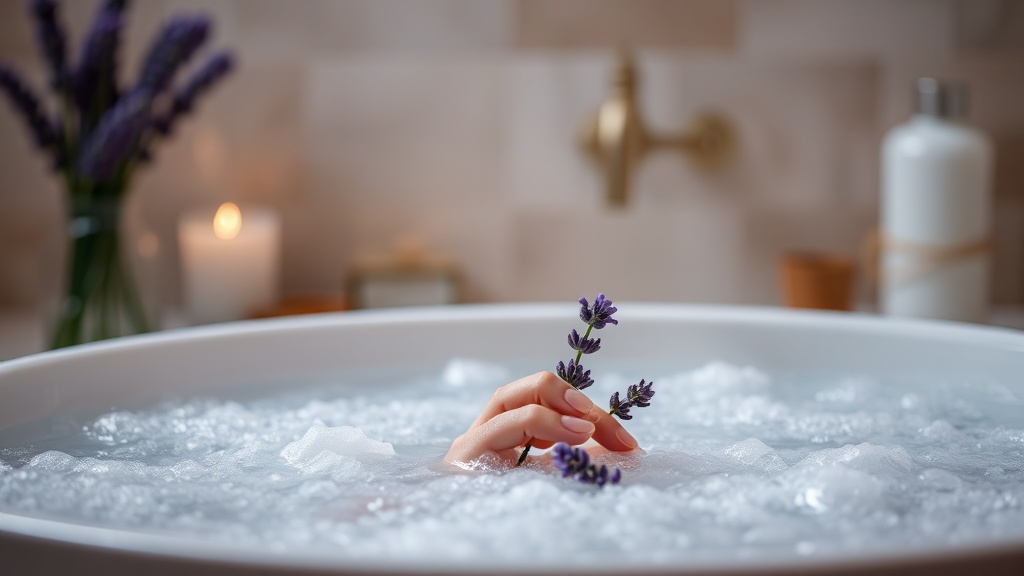
Crafting a Calming Lavender and Magnesium Bath Soak

Are you looking for a way to actually relax your muscles and quiet your mind after a long day without relying on expensive, store-bought bath bombs that are mostly glitter and synthetic fragrance? This guide covers the science of why magnesium and lavender work together to support physical and mental relaxation, the specific ingredients you need to make a high-quality soak at home, and the exact ratios to ensure you aren't just making expensive scented water. We’ll look at the chemistry of magnesium sulfate and the botanical properties of Lavandula angustifolia so you can create a bath that actually does something for your nervous system.
Why Does Magnesium Help with Muscle Relaxation?
Magnesium helps relax muscles by acting as a natural calcium blocker, preventing the muscle from staying in a state of contraction. While the science regarding how much magnesium is actually absorbed through the skin (transdermal absorption) is still a subject of debate among researchers, many people find significant relief using magnesium sulfate—commonly known as Epsom salt—in their bathwater. Magnesium is a mineral that plays a part in hundreds of enzymatic reactions in the body, and even a slight deficiency can lead to muscle tightness or restless sleep.
When you soak in a warm bath with magnesium sulfate, the warmth helps increase blood flow to the skin, which can aid the process. It isn't magic; it's basic physiology. If you've ever felt that "twitchy" sensation in your legs at night, your mineral levels might be a bit low. You can read more about how different minerals support the body on the National Institutes in Health database.
One thing to keep in mind: don't expect a miracle if you're severely deficient. This is a supportive tool, not a medical treatment for a clinical deficiency. (I've seen plenty of people try to fix everything with a bath, but it's a supplement to a healthy lifestyle, not a replacement for medical advice.)
What Are the Best Ingredients for a Calming Bath Soak?
The best ingredients for a calming bath soak are high-quality magnesium sulfate, dried culinary-grade lavender, and a carrier oil or emollient to prevent skin dryness. You want to avoid the cheap "scented salts" found in big-box retailers that use synthetic "parfum," which can irritate sensitive skin and provide zero therapeutic value. Instead, focus on these three categories:
- The Base: Epsom Salt (Magnesium Sulfate). This is the heavy lifter for muscle relaxation.
- The Botanical: Dried Lavender Flowers. Use Lavandula angustifolia for the best scent profile and lowest camphor content.
- The Emollient: A carrier oil like Sweet Almond Oil or Jojoba Oil. This helps "carry" the botanical oils and prevents the salt from drying out your skin.
If you want to add a bit more depth to your mineral support, you might look into using nettle and oat straw in your diet or infusions, as these plants are also rich in micronutrients. But for a bath, we are sticking to the basics: salt, flowers, and oil.
| Ingredient | Primary Function | Recommended Amount |
|---|---|---|
| Epsom Salt | Muscle relaxation & mineral support | 2 cups |
| Dried Lavender | Aromatherapy & calming scent | 1/4 cup |
| Sweet Almond Oil | Skin hydration & oil carrier | 1-2 tablespoons |
| Essential Oil (Optional) | Intensified aromatherapy | 5-10 drops |
How Do You Make a Lavender Magnesium Bath Soak?
You make a high-quality bath soak by infusing your carrier oil with lavender and then mixing that infusion with your magnesium salts. It's a simple three-step process that ensures the scent is distributed evenly and the minerals are ready for your soak.
Step 1: The Infusion
First, you need to get that lavender scent into an oil. You can do this the long way by letting dried lavender sit in a carrier oil for a few weeks, or the fast way: heat a small amount of Sweet Almond Oil or Jojoba Oil in a double boiler with your dried lavender. Keep the temperature low—don't boil it! You want to gently warm the oil to extract the scent without scorching the botanical material. Once the oil smells fragrant, strain out the dried bits. (If you're in a hurry, you can just use a high-quality lavender essential oil like those from Plant Therapy or Mountain Rose Herbs, but a true infusion feels more intentional.)
Step 2: The Mixing
Take your 2 cups of Epsom salt and place them in a large glass bowl. Slowly pour your infused oil over the salt. I usually add the oil one tablespoon at a time, stirring constantly. You want the salt to feel slightly damp and fragrant, but not clumpy or soaked. If it's too wet, it won't store well. If you're using pure essential oil instead of an infusion, mix the oil with the salt first to ensure the scent is distributed.
Step 3: The Final Addition
Add your dried lavender flowers to the mixture. This provides a visual element and a bit of texture for the bath. Store your mixture in an airtight glass jar. A glass jar is better than plastic because it won't leach chemicals and it keeps the scent from evaporating as quickly. Keep it in a cool, dark place.
It's worth noting that if you have extremely sensitive skin, you might want to test a small amount of the soak in your bath before submerging your whole body. Even natural botanicals can cause reactions in some people. If you find yourself reacting to lavender, you might want to look into the benefits of chamomile, which is often a gentler alternative for skin sensitivity.
How Long Should You Soak for Maximum Benefit?
You should soak for 20 to 30 minutes to allow the warmth and the minerals to work effectively. Anything less than 15 minutes is barely enough time for the temperature of your skin to shift, let alone the potential benefits of the magnesium. Anything longer than 30 minutes might actually start to dry out your skin as the water evaporates and pulls moisture away from your body.
The goal is to reach a state of "warm relaxation." The heat helps dilate your blood vessels (vasodilation), which can help with circulation and muscle stiffness. As the water begins to cool, you'll feel your heart rate slow down. This is the perfect time to practice some deep breathing or simply sit in silence.
A quick tip: don't use boiling hot water. If the water is too hot, you'll trigger a stress response in your body rather than a relaxation response. Aim for a temperature that feels "comfortably warm"—roughly 98 to 102 degrees Fahrenheit. If you're using a digital thermometer, it's easy to check, but a quick hand test is usually enough. If it feels "too hot" to your touch, it's too hot for a long soak.
Once you're done, rinse your skin with fresh water to remove any salt residue. This prevents that itchy, tight feeling that often follows an Epsom salt bath. Apply a good moisturizer or body oil immediately after patting dry to lock in the hydration from your bath. This is a great time to use a simple, unfragranced oil to keep your skin soft.
Steps
- 1
Gather your organic Epsom salts and dried lavender buds
- 2
Mix the ingredients in a glass container to ensure even distribution
- 3
Add a few drops of lavender essential oil for scent enhancement
- 4
Store in an airtight jar to maintain freshness and aroma