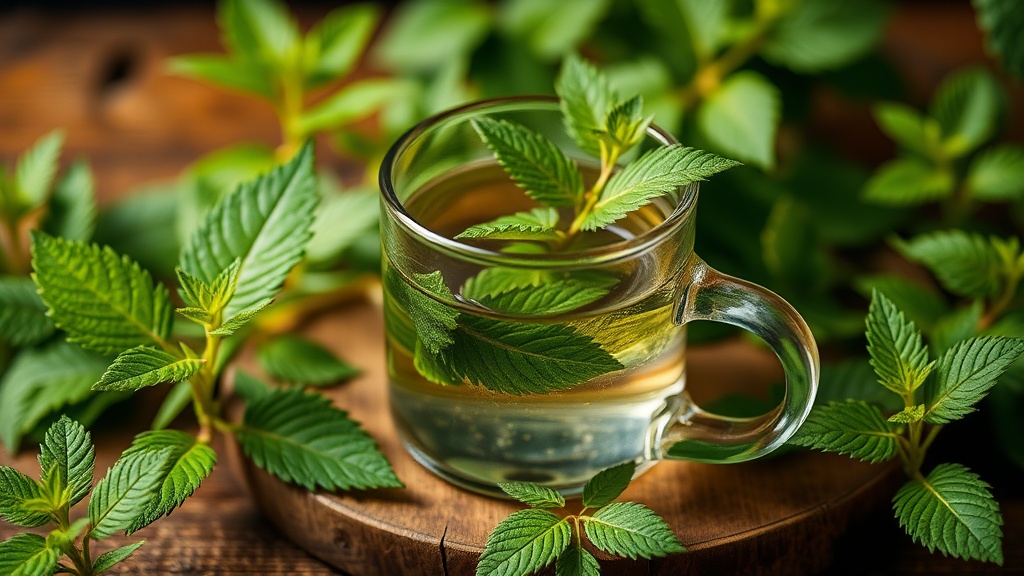
Finding Balance with Nettle Leaf Infusions

This post explains the nutritional profile of Urtica dioica (Stinging Nettle), how to prepare infusions for maximum mineral absorption, and the science-backed ways it supports metabolic and inflammatory health. You'll find specific instructions for making nutritive infusions, safety guidelines regarding interactions, and practical ways to incorporate this plant into a regular wellness routine.
What are the nutritional benefits of Nettle Leaf?
Nettle leaf is a nutrient-dense powerhouse containing high concentrations of vitamins, minerals, and phytonutrients that support various bodily functions. Unlike many "superfoods" that rely on marketing hype, nettle's profile is backed by actual chemical composition.
When you look at the breakdown, the mineral content is what really stands out. It is particularly high in iron, calcium, magnesium, and potassium. These aren't just numbers on a label; they are the building blocks for things like bone density and blood health. Most people think of nettle as a simple diuretic, but it's much more complex than that.
The plant contains a significant amount of chlorophyll, which is why the leaves are such a vibrant, deep green. This isn't just for show—chlorophyll is a vital component in many biological processes. It's also a source of silica, a trace mineral that supports connective tissue and skin health.
Here is a quick breakdown of the primary nutrients found in dried nettle leaf:
| Nutrient | Primary Benefit |
|---|---|
| Iron | Supports oxygen transport in the blood |
| Calcium | Supports bone and nerve function |
| Silica | Supports skin, hair, and nail strength |
| Magnesium | Assists in muscle relaxation and nerve signaling |
| Vitamin K | Important for blood clotting and bone health |
It's worth noting that the availability of these nutrients depends heavily on how you prepare the plant. A quick tea bag might not be enough to extract the heavy-duty minerals found in the leaf structure.
How do you make a nutritive nettle infusion?
A nutritive infusion is made by steeping large amounts of dried nettle leaf in hot water for several hours to extract minerals and alkaloids. This process is different from a standard tea—it's more of a slow extraction method designed to pull out everything the plant has to offer.
If you just dip a tea bag in a mug for three minutes, you're mostly getting a very mild flavored water. To get the actual mineral benefits, you need time and volume. I usually recommend using a quart-sized Mason jar for this.
The Method:
- Measure: Use about one ounce (roughly a cup) of dried nettle leaf per quart of water.
- Heat: Bring water to a boil, then let it sit for a minute so it isn't quite at a rolling boil (this helps preserve some of the more delicate compounds).
- Combine: Pour the hot water over the dried leaves in your jar.
- Steep: Cover the jar and let it sit for at least 4 to 8 hours. Some people leave it overnight.
- Strain: Use a fine mesh strainer or a piece of cheesecloth to remove the plant material.
The resulting liquid will be a deep, dark green—almost like a concentrated vegetable broth. This is a good sign. If it looks pale and yellow, you likely didn't use enough leaf or didn't steep it long enough. You can store this in the refrigerator for up to three days. It's much more effective than the quick-steeped versions you find in grocery store tea aisles.
If you find the taste a bit too "earthy" or vegetal, you can mix it with a little lemon juice or a splash of fruit juice. It's a much more substantial drink than a standard herbal tea. For a more calming effect in the evening, some people like to blend it with linden flower tea to balance the mineral-heavy profile with a bit of softness.
Is Nettle tea safe to drink every day?
Nettle is generally considered safe for most people when consumed in food amounts or as a moderate infusion, but certain individuals should exercise caution due to its diuretic effects and potential interactions. It isn't a "magic potion," and it does have real physiological effects.
The most common thing to watch for is its effect on blood sugar and blood pressure. Because nettle can lower blood glucose and blood pressure, people taking medications for diabetes or hypertension should talk to their doctor first. It's not a suggestion—it's a safety precaution. If you're already on medication, the plant might amplify the effects of your drugs in a way that's hard to track without medical supervision.
Another thing to keep in mind is its diuretic properties. Nettle encourages the body to release fluids. If you're already taking a diuretic medication (like furosemide), you might end up feeling a bit dehydrated if you aren't careful. Always keep an eye on your hydration levels. It's a good idea to drink plenty of plain water alongside your infusions.
For those with kidney issues, there's a bit more nuance. While nettle is often used to support kidney health, its high potassium content means you should check with a specialist if you have advanced kidney disease. According to the National Institutes of Health (NIH), many of the plant's benefits are well-documented, but individual responses can vary wildly based on your baseline health.
Who should be cautious?
- Pregnant or nursing women (consult a provider first).
- Individuals on blood-thinning medications.
- People with kidney disease or high-potassium restrictions.
- Those taking blood sugar-lowering medications.
I always tell people: listen to your body. If you feel jittery or experience any unusual changes in your digestion or heart rate, stop the infusion. Plants are powerful, and they work with your biology, not just alongside it.
How does Nettle affect inflammation and seasonal allergies?
Nettle contains bioactive compounds that may help inhibit the production of inflammatory cytokines and block histamine receptors, which is why many people use it for seasonal discomfort. It's a common tool in the herbalist's kit for managing seasonal shifts.
The science here is interesting. Research suggests that certain constituents in the leaf can interfere with the body's inflammatory pathways. While it's not a replacement for medical-grade antihistamines during a severe reaction, many people find it helps dampen the "itchy" feeling of seasonal transitions. It's more of a gentle stabilizer than a heavy-duty suppressant.
It's not just about allergies, though. The anti-inflammatory properties can also be useful for general systemic support. If you're dealing with the typical aches and pains of a sedentary lifestyle, the minerals in nettle—especially magnesium—can be a helpful addition to your routine. It's a slow-acting, cumulative kind of support, not an instant fix.
If you find yourself needing more support for your nervous system during these times, you might consider lemon balm. While nettle focuses on the physical-mineral side, lemon balm addresses the more emotional, stress-related components of wellness. They can actually work quite well together in a routine.
The reality is that wellness isn't about a single "miracle" plant. It's about how you layer your habits. Using a nettle infusion as a daily mineral supplement is a way to build a foundation of nutrition. It's not a magic trick—it's just consistent, plant-based support.
If you're just starting out, don't feel like you have to jump into a gallon of infusion immediately. Start with one cup a day. See how your body reacts. Is your digestion stable? Is your energy consistent? These are the questions you should be asking yourself as you integrate more whole-plant nutrition into your life.