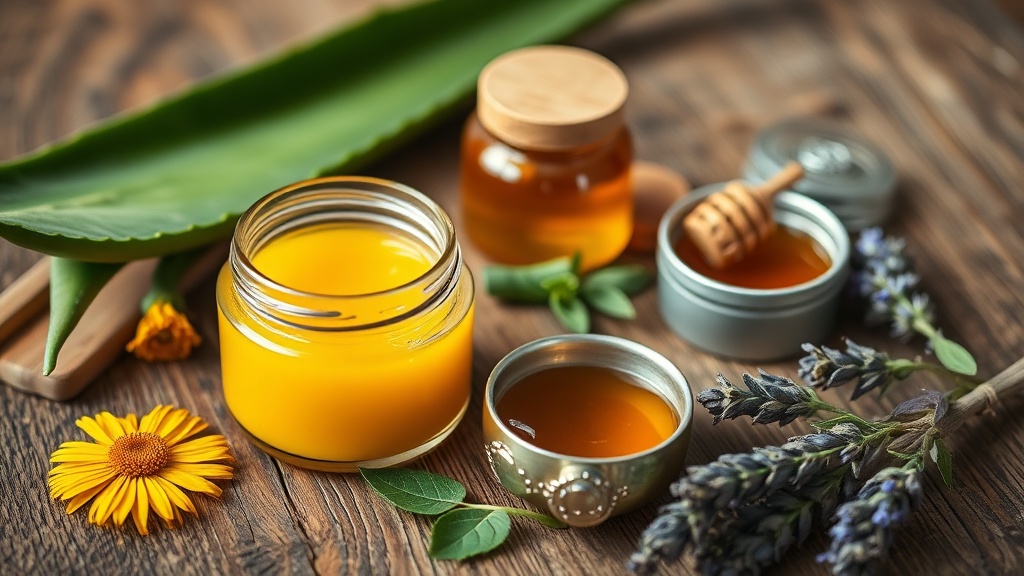
Herbal First Aid for Minor Burns: What Actually Works Beyond Aloe Vera

The Aloe Vera Reflex — And What Else Your Skin Actually Wants
Someone gets a minor burn in the kitchen. Maybe a splash of hot oil, maybe a brush against the oven rack. What's the first thing everyone reaches for? Aloe vera. It's practically a reflex at this point — grab the green gel, slather it on, done.
And look, aloe isn't a bad choice. But it's become such a default that most people never think beyond it. Meanwhile, there's a whole cabinet of botanicals with genuine evidence for skin repair, and some of them outperform aloe in specific situations. As someone who has both a Merck Manual and a dried calendula stash within arm's reach at all times, I want to walk through what actually works — and where the line sits between herbal first aid and "please go see a doctor."
First: When to Skip the Herbs Entirely
I'm putting this at the top because I've watched people try to poultice their way through things that needed medical attention. Do not reach for any botanical if:
- The burn is larger than your palm
- There's blistering across a wide area (second-degree territory)
- The skin looks white, brown, or charred (third-degree — call 911)
- The burn is on your face, hands, feet, or genitals
- You have diabetes or an immune condition that slows healing
Herbal first aid is for minor burns: small, superficial, red, painful but intact skin. First-degree stuff. The kind where you ran cold water over it for ten minutes (please always do that first) and now you're wondering what comes next.
Calendula: The One I Actually Reach for First
Sorry, aloe. In my home apothecary, Calendula officinalis sits in the front row. Here's why.
Calendula has a surprisingly robust body of evidence for wound healing. A 2008 study in the Journal of Clinical Oncology found calendula cream significantly reduced the severity of radiation-induced dermatitis compared to a standard pharmaceutical ointment (trolamine). That's not a folk remedy study — that's an oncology journal comparing calendula to a drug used in hospitals.
The mechanism appears to involve increased collagen production and improved tissue granulation. Calendula also has demonstrated anti-inflammatory activity through inhibition of pro-inflammatory cytokines. In plain language: it helps your skin rebuild faster while turning down the inflammatory volume.
How I use it: Calendula-infused oil (not essential oil — an infusion of dried flowers in olive or jojoba oil) applied gently to minor burns after they've been cooled. I also keep a calendula salve in my kitchen drawer. You can make one by warming calendula-infused oil with beeswax at roughly a 4:1 ratio.
The catch: If you're allergic to plants in the Asteraceae family (ragweed, daisies, chrysanthemums), calendula might trigger a contact reaction. Patch test first.
Aloe Vera: Good, Not Magic
Aloe (Aloe barbadensis miller) does have real evidence behind it. A 2019 meta-analysis in the Iranian Journal of Medical Sciences looked at burn healing times and found aloe vera preparations shortened healing by an average of about nine days compared to conventional treatments in minor burn patients.
The active compounds — acemannan and other polysaccharides — appear to support epithelial cell proliferation and have mild antimicrobial properties. It's a legitimate wound-healing aid.
But here's where I get opinionated: most commercial aloe gels are terrible. They're loaded with preservatives, synthetic thickeners, alcohol (which can sting and dry out damaged skin), and artificial colors. That neon green gel from the drugstore? It's aloe-flavored petrochemistry. If you're going to use aloe, use the actual plant. Slice a leaf, scrape out the inner gel, apply it fresh. Or buy a product where aloe is the first ingredient and the ingredient list is short enough to read without squinting.
Lavender Oil: The Complicated One
Lavender (Lavandula angustifolia) is interesting because its reputation for burn care comes from a single anecdote — René-Maurice Gattefossé allegedly plunging his burned hand into lavender essential oil in a lab accident in 1910. This story essentially launched modern aromatherapy. The problem? The story has been retold so many times with so many embellishments that what actually happened is unclear.
That said, lavender essential oil does have some evidence for wound healing. A 2015 study in BMC Complementary and Alternative Medicine found it accelerated wound closure in a rat model. Human data is thinner, but there are a few small clinical trials showing benefit for episiotomy wound healing and minor skin damage.
My honest take: I don't apply undiluted essential oils to burns. Full stop. Essential oils are concentrated chemical compounds, and applying them neat to damaged skin can cause further irritation or sensitization. If you want to use lavender, dilute it — 2-3 drops per tablespoon of carrier oil (coconut, jojoba, olive). And wait until the acute burning phase has passed. Don't put essential oils on a fresh burn.
Honey: Not Herbal, But I'd Be Irresponsible to Skip It
Technically, honey isn't an herb. But it shows up in so many herbal first aid kits that I need to address it, and frankly, the evidence is strong enough that leaving it out would be a disservice.
Medical-grade honey (particularly Manuka honey, which has standardized antibacterial activity measured as UMF or MGO ratings) has been used in clinical wound care for decades. A 2015 Cochrane review — which is the gold standard for evidence synthesis — found that honey probably speeds healing of partial-thickness burns compared to conventional dressings.
Honey creates a moist wound environment, has inherent antimicrobial properties (from hydrogen peroxide production and low pH), and contains compounds that may reduce inflammation. Some hospitals use medical-grade honey dressings (Medihoney, for example) for exactly these reasons.
Practical notes: Don't use the bear-shaped squeeze bottle from your pantry on wounds. Raw, unpasteurized honey is better, and medical-grade honey is ideal. Also — and I cannot believe I have to say this — do not apply honey to burns on infants under one year old. Botulism spores.
Plantain: The Overlooked Yard Weed
Plantago major, common plantain (not the banana relative), is probably growing in your lawn right now and you've been mowing over it. This is one of the oldest wound-care plants in Western herbalism, and it's having a quiet comeback in clinical research.
Plantain contains allantoin — the same compound that's a key ingredient in many commercial wound-healing creams. It also contains aucubin, an iridoid glycoside with demonstrated anti-inflammatory and antimicrobial activity. A 2013 study in Phytotherapy Research confirmed wound-healing properties in animal models, showing improved collagen deposition and faster wound closure.
How I use it: For minor burns and skin irritation, I make a quick poultice — chew or crush fresh plantain leaves and apply them directly to the skin. Yes, the chewing is traditional and actually functional (saliva contains enzymes that help break down plant cell walls and release active compounds). If you find that too rustic, a plantain-infused oil works as well. I keep one in my first aid kit year-round.
What About Comfrey?
I get asked about comfrey (Symphytum officinale) for burns constantly, so let me address it directly. Comfrey contains allantoin (like plantain) and has a long historical pedigree for wound healing — its folk name is literally "knitbone."
Here's my position: external use of comfrey on intact or superficially damaged skin is probably fine for most adults. Comfrey creams are approved in Germany for topical use on bruises, sprains, and muscle pain. The concern is pyrrolizidine alkaloids (PAs), which are hepatotoxic when ingested. Topical absorption of PAs is low but not zero.
My rules for comfrey:
- Never take it internally
- Don't apply it to open wounds (this increases absorption)
- Don't use it on children or during pregnancy
- Limit topical use to 4-6 weeks per year
- Use leaf preparations, not root (root has higher PA content)
For minor burns specifically? I'd reach for calendula or plantain first. Comfrey is better suited for bruises and musculoskeletal complaints where its anti-inflammatory effects shine.
Building a Skin-Repair Kit
If I had to stock a small herbal first aid kit for minor burns and skin irritation — and nothing else — here's what I'd put in it:
- Calendula salve — your daily driver for minor burns, scrapes, and irritated skin
- A live aloe plant — kept on the kitchen windowsill, not a bottle of green gel
- Raw honey — preferably Manuka with a UMF 10+ rating
- Plantain-infused oil — for when you need something soothing and anti-inflammatory
- Diluted lavender oil — pre-mixed at a safe dilution in a roller bottle
Total cost if you make these yourself: maybe $30-40. Compare that to the wellness industry's $85 "burn recovery botanical blend" that's mostly coconut oil with a drop of tea tree and an inspirational label.
The Part Where I Remind You I'm Not Your Doctor
Everything I've shared here is educational. I'm a clinical herbalist, not a physician. Minor burns that are healing normally — great, these botanicals can support that process. But if a burn isn't improving after a few days, if you see signs of infection (increasing redness, swelling, pus, red streaks, fever), or if you have any doubt about severity — go to urgent care. Herbs are a first response, not a substitute for medical evaluation when things aren't going right.
Your skin is your largest organ and your first line of defense. Treat it with the same respect you'd give any other part of your body — which means knowing when plants can help, and when you need a professional.
Be well and be wise.