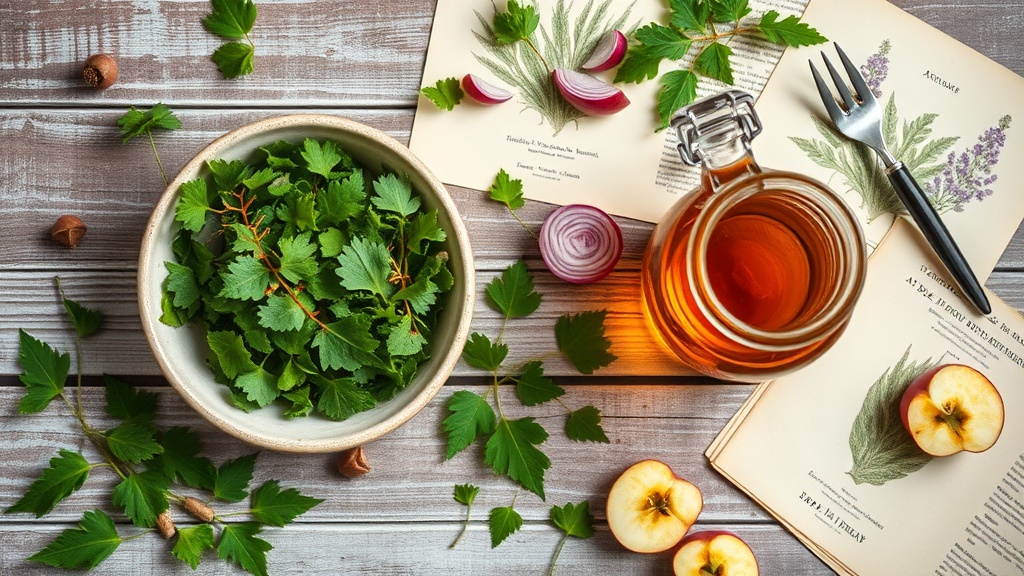
Spring Allergy Herbs: What the Research Actually Says About Nettle, Butterbur, and Quercetin

Your Nose Already Knows Spring Is Here
Pollen counts are climbing, your eyes are doing that awful prickly thing, and someone on Instagram just told you to drink nettle tea and "let your body heal naturally." Meanwhile, you're standing in the supplement aisle staring at seventeen different bottles, all promising to be nature's answer to Zyrtec.
I've been fielding allergy questions in my practice since February — every year, like clockwork. And every year, the same herbs come up: stinging nettle, butterbur, quercetin. So let's talk about what the research actually says, where these botanicals genuinely help, and where you're better off reaching for the antihistamine your allergist recommended.
The Big Three: Nettle, Butterbur, and Quercetin
These are the herbs and compounds that show up in every "natural allergy relief" listicle. They're not equally useful, and they're definitely not interchangeable. Here's where they actually stand.
Stinging Nettle (Urtica dioica): Promising but Overhyped
Nettle is the poster child of herbal allergy support, and I get why — it's accessible, it tastes decent as tea, and the folk tradition runs deep. The proposed mechanism involves inhibiting several inflammatory pathways, including histamine release from mast cells.
Here's my honest read: the clinical evidence is thin. The most-cited study is a small randomized trial from 2009 that showed freeze-dried nettle leaf rated better than placebo for allergy relief. But it was a single study with modest participant numbers, and the effect sizes weren't dramatic. More recent reviews acknowledge nettle's anti-inflammatory potential in lab settings while noting that robust human trials are still lacking.
My take: I use nettle leaf infusions regularly during allergy season — not because the evidence is bulletproof, but because it's nutritive (high in minerals like iron and calcium), safe for most people, and it does seem to take the edge off for some of my clients. It's a reasonable addition to your daily practice. It is not a replacement for cetirizine if your allergies make you miserable.
How to use it: Freeze-dried capsules (300 mg, 2-3x daily) have the most support from what research exists. Nettle leaf tea or long infusions work too — steep a full ounce of dried leaf in a quart of boiling water for 4+ hours. This isn't your standard 5-minute tea bag situation.
Safety note: Generally well-tolerated. Can interact with blood thinners, diabetes medications, and lithium. If you're on any of those, talk to your prescriber first.
Butterbur (Petasites hybridus): The Strongest Evidence — With a Serious Caveat
Butterbur is the one that actually has clinical trial data worth discussing. A well-known 2002 study published in the BMJ compared butterbur extract to cetirizine (Zyrtec) and found comparable symptom relief for seasonal allergic rhinitis. A 2023 review confirmed butterbur as a "safe and effective natural treatment option" for hay fever when using PA-free extracts.
Sounds great, right? Here's the caveat that most wellness blogs skip over entirely.
Raw butterbur contains pyrrolizidine alkaloids (PAs) — hepatotoxic compounds that can cause serious liver damage and are potentially carcinogenic with long-term exposure. The only butterbur products worth considering are those processed to remove PAs. The German product Petadolex was the one used in most clinical trials and was certified PA-free.
But — and this is where my former research librarian brain gets twitchy — there have been rare reports of liver injury even with products labeled as PA-free. The NCCIH (National Center for Complementary and Integrative Health) specifically warns about this. Whether those cases involved genuinely PA-free products or labeling failures is unclear, but it's enough to make me cautious.
My take: If you're going to try butterbur, only use a certified PA-free extract from a reputable manufacturer. Don't wildcraft it, don't buy random supplements off Amazon, and absolutely do not use raw butterbur root or leaf. Short-term use (a few weeks during peak season) with a known PA-free product is reasonable. Long-term use makes me nervous until we have better safety data.
Dose used in studies: 50-75 mg standardized extract (Petadolex), twice daily.
Who should skip it: Anyone with liver disease, pregnant or nursing people, children, and anyone taking medications metabolized by the liver. And honestly? If you can't verify the PA-free status of your product with documentation from the manufacturer, skip it entirely.
Quercetin: The Flavonoid That Actually Makes Mechanistic Sense
Quercetin isn't an herb — it's a plant flavonoid found in onions, apples, berries, and capers (among other foods). It stabilizes mast cells and inhibits histamine release, which is mechanistically solid for allergy support. Think of it as working upstream of symptoms: rather than blocking histamine receptors like Benadryl does, quercetin may reduce the amount of histamine your body dumps in the first place.
The clinical evidence is moderate and growing. Several studies show improvement in rhinitis symptoms and quality of life scores with supplemental quercetin, though the research isn't as large-scale as what we have for pharmaceutical antihistamines. A key limitation: quercetin has poor bioavailability on its own, so formulations matter.
My take: This is the one I recommend most consistently for allergy season support. The mechanism is well-understood, the safety profile is solid, and the worst case scenario is that it doesn't work as well as you hoped — not that it damages your liver. I pair it with bromelain (a pineapple enzyme) and vitamin C, which may improve absorption and add their own mild anti-inflammatory effects.
Dose typically studied: 500-1000 mg daily, ideally split into two doses, taken with meals. Look for quercetin phytosome or quercetin with bromelain for better absorption.
Safety note: Well-tolerated at typical doses. May interact with certain antibiotics (fluoroquinolones) and cyclosporine. High doses can occasionally cause headache or tingling.
What I Actually Do During Allergy Season
Full transparency, because I think you deserve to know what the person giving you advice actually practices:
- Daily nettle infusion — I make a big jar of long-steeped nettle and drink it throughout the day. More for the minerals than any dramatic antihistamine effect, but I do think it helps at the margins.
- Quercetin with bromelain — 500 mg twice daily, starting about 2-3 weeks before my typical symptom onset. Quercetin works best as prevention, not rescue.
- Local honey — I'll be honest, the evidence for this is extremely weak. One study showed some benefit, several showed none. I put it in my nettle tea because it tastes good. That's a valid reason.
- Cetirizine on bad days — Yes, I take a conventional antihistamine when pollen counts spike and my eyes swell shut. Herbs and pharmaceuticals are roommates, not enemies. This is a hill I will die on.
The Herbs That Don't Make My List
A few popular recommendations I specifically don't endorse for allergies:
- Elderberry — Great immune support during cold and flu season, but the evidence for allergic rhinitis specifically is negligible. Don't conflate "immune support" with "allergy relief." They're different processes.
- Turmeric/curcumin — Anti-inflammatory, yes. Useful for allergies specifically? The data is too preliminary to recommend it over options with better-established mechanisms for histamine-driven symptoms.
- Essential oils (eucalyptus, peppermint) — Steam inhalation might temporarily open your sinuses, but this isn't treating the allergic response. And please don't ingest essential oils for allergies. I've seen the social media posts. I'm begging you.
The Bottom Line From Someone Who Grows Nettle in Her Backyard
Spring allergies are a real immune response to real allergens, and they deserve real interventions — whether those come from a plant or a pharmacy. The herbs with the best evidence for allergy support are butterbur (with significant safety caveats) and quercetin (with fewer caveats and decent mechanistic backing). Nettle is a reasonable daily practice herb that probably helps a little and definitely won't hurt.
What none of these herbs will do is cure your allergies, rewrite your immune system, or replace the allergy management plan your doctor helped you build. Use them as complementary tools, not alternatives. Start them early in the season for the best shot at meaningful benefit. And for the love of all things botanical, please stop buying supplements based on Instagram infographics.
Be well and be wise.