The Herb-Painkiller Overlap: OTC Drug Interactions Every Herb User Should Check

The Question Nobody Asks at the Pharmacy Counter
Here's a scene I witness constantly: someone walks into my consultation room carrying a canvas tote full of supplements. Turmeric capsules. Ginkgo extract. St. John's Wort. Willow bark tincture. And when I ask what medications they take, they rattle off ibuprofen for their knee, a daily aspirin their cardiologist recommended, and occasional acetaminophen for headaches.
"Have you talked to your pharmacist about how these interact?" I ask.
The answer is almost always no. Because most people don't think of herbs as something that interacts with anything. They're "natural." They're from the health food store. They sit on a different shelf than the Advil.
But your liver doesn't care which shelf something came from. It metabolizes all of it.
Why OTC Painkillers Deserve Special Attention
Prescription drug interactions get a lot of airtime in herbal safety conversations — and they should. But over-the-counter analgesics are the drugs people take most casually, most frequently, and with the least medical oversight. The CDC estimates that roughly 25% of American adults use an OTC pain reliever in any given week. That's tens of millions of people reaching for ibuprofen, naproxen, aspirin, or acetaminophen on a regular basis.
Now layer herbs on top. Many popular botanicals share metabolic pathways, physiological effects, or organ burden with these same drugs. The result isn't always dramatic. Sometimes it's a slowly worsening side effect that nobody connects to the combination. Sometimes it's a blood test that comes back wrong six months later.
I'm going to walk through the four most common OTC pain relievers and the herbal interactions I flag most often in practice. This isn't a complete database — for that, consult the Natural Medicines Comprehensive Database or talk to a clinical herbalist or pharmacist who actually reviews your full intake. But these are the combinations I see people stumble into most often.
Ibuprofen (Advil, Motrin) + Herbs That Thin Blood or Irritate the Gut
Ibuprofen is a non-steroidal anti-inflammatory drug (NSAID). It works by inhibiting cyclooxygenase enzymes (COX-1 and COX-2), which reduces prostaglandin production. The result: less inflammation, less pain, but also less protection for your stomach lining and reduced platelet aggregation.
Herbs to watch:
- Willow bark (Salix spp.): Contains salicin, which your body converts to salicylic acid — the same active metabolite as aspirin. Stacking willow bark with ibuprofen is doubling down on COX inhibition, gastric irritation, and bleeding risk. I've had clients tell me they take willow bark instead of ibuprofen, which is a reasonable conversation to have. But taking both? That's not hedging your bets. That's compounding risk.
- Ginkgo (Ginkgo biloba): Inhibits platelet-activating factor (PAF). Combined with ibuprofen's own antiplatelet effects, the bleeding risk increases. A 2005 case report in Postgraduate Medicine documented spontaneous hyphema (bleeding into the eye's anterior chamber) in a patient combining ginkgo and ibuprofen.
- Turmeric/Curcumin: This one gets complicated. Curcumin does have anti-inflammatory and antiplatelet properties. At culinary doses — the turmeric in your curry — this is generally not a concern. But those high-dose curcumin supplements delivering 500–2000 mg of standardized extract? Combined with regular ibuprofen use, you're stacking anti-inflammatory and antiplatelet effects from two directions. Monitor for unusual bruising, and tell your doctor you're taking both.
Aspirin + Herbs That Affect Clotting
Daily low-dose aspirin (81 mg) is prescribed for cardiovascular protection in certain populations. It irreversibly inhibits COX-1 in platelets, reducing their ability to aggregate. The keyword here is irreversibly — once aspirin hits a platelet, that platelet is affected for its entire 7-10 day lifespan.
This is exactly why herb-aspirin combinations make me particularly cautious.
Herbs to watch:
- Garlic supplements (Allium sativum): Raw garlic and garlic supplements inhibit platelet aggregation through multiple pathways, including ajoene and allicin derivatives. Cooking garlic largely deactivates these compounds, so roasted garlic in your pasta isn't the concern here. Concentrated garlic capsules taken daily alongside aspirin therapy? That warrants a conversation with your prescribing physician. A meta-analysis in Platelets (2015) confirmed that garlic supplements significantly affect platelet function in healthy volunteers.
- Dong quai (Angelica sinensis): Contains coumarins that may potentiate anticoagulant effects. I've seen this combination especially in perimenopausal women who are taking baby aspirin for cardiovascular risk and dong quai for hot flashes. Both are reasonable choices individually. Together, they need monitoring.
- Feverfew (Tanacetum parthenium): Used traditionally for migraine prevention, feverfew inhibits platelet aggregation and prostaglandin synthesis. Combining it with aspirin creates redundant antiplatelet activity. If someone is already on daily aspirin, adding feverfew for migraines needs professional guidance.
Acetaminophen (Tylenol) + Herbs That Burden the Liver
Acetaminophen is the OTC drug that scares me most — not because it's dangerous when used correctly, but because its margin of safety is narrower than people realize. The maximum recommended dose is 3,000-4,000 mg per day, but liver damage can occur closer to that upper limit, especially in people who drink alcohol, are fasting, or have pre-existing liver compromise.
Acetaminophen is metabolized primarily in the liver. At normal doses, most of it gets conjugated safely and excreted. But a small percentage gets converted by CYP2E1 into NAPQI, a toxic metabolite. Glutathione neutralizes NAPQI — but if glutathione stores are depleted (by alcohol, malnutrition, or overuse), NAPQI accumulates and damages hepatocytes.
Herbs to watch:
- Kava (Piper methysticum): Kava has documented hepatotoxic potential — enough that several countries have restricted its sale. The mechanism is still debated (CYP inhibition, direct toxicity, adulterants), but adding any hepatotoxic substance on top of regular acetaminophen use is asking your liver to fight on two fronts. I do not recommend combining these.
- Comfrey (Symphytum officinale): Contains pyrrolizidine alkaloids (PAs) that are directly hepatotoxic. Internal use of comfrey is already contraindicated by most herbalists and regulatory bodies. But I still encounter PA-containing products (sometimes mislabeled) in the wild. If you're taking acetaminophen regularly, PA exposure compounds the hepatic risk significantly.
- High-dose green tea extract: EGCG in concentrated supplement form (not brewed tea) has been associated with liver injury in case reports, particularly in fasted states. The EFSA set a safety threshold of 800 mg EGCG/day from supplements. Combined with regular acetaminophen, this is another liver burden combination I flag.
Naproxen (Aleve) + The Same Usual Suspects
Naproxen is another NSAID, so many of the same cautions apply as with ibuprofen: willow bark, ginkgo, and high-dose curcumin all compound antiplatelet and GI risks. But naproxen has a longer half-life (12-17 hours versus ibuprofen's 2-4 hours), which means it stays in your system longer and the window for interaction is wider.
One combination I want to highlight specifically:
- Naproxen + Licorice root (Glycyrrhiza glabra): Glycyrrhizin in licorice inhibits 11-beta-hydroxysteroid dehydrogenase, leading to cortisol accumulation in the kidneys. This causes sodium retention, potassium loss, and elevated blood pressure. NSAIDs also promote sodium retention and can raise blood pressure. The combination can create a meaningful hypertensive effect, especially in people already managing blood pressure. This is one I check for routinely because licorice root shows up in so many herbal formulas — throat coat teas, digestive bitters, adrenal support blends. People often don't realize they're consuming it.
What I Actually Tell My Clients
I don't tell people to stop taking herbs. I don't tell them to stop taking OTC pain relievers. I tell them to stop pretending these exist in separate categories.
Here's my standard guidance:
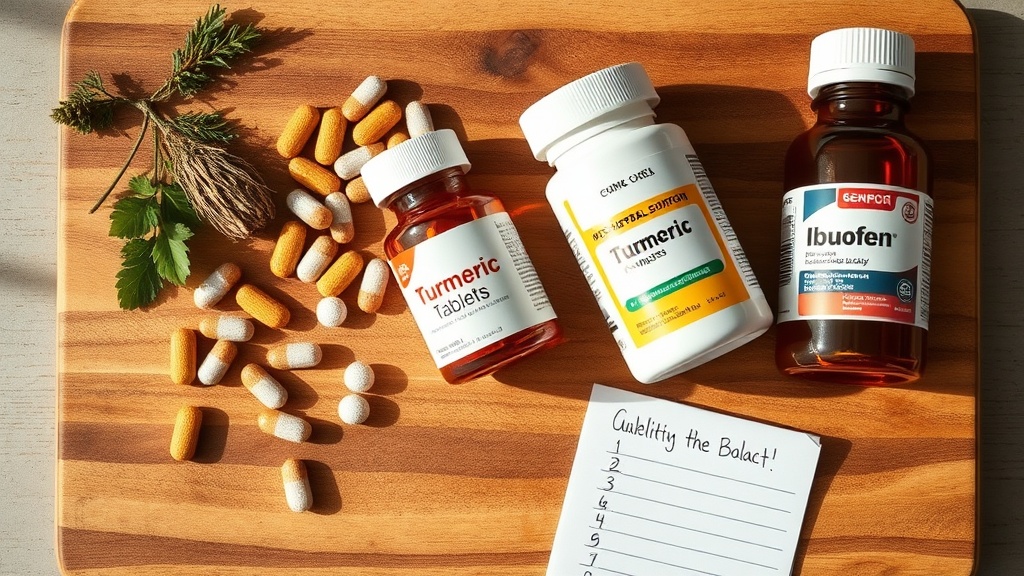
- Make one list. Everything you put in your body that has a physiological effect goes on the same piece of paper. Prescription drugs, OTC drugs, supplements, herbal teas you drink daily, tinctures, even that mushroom coffee. One list.
- Show that list to someone qualified. A pharmacist (they're free to consult and many are better at interaction-checking than your GP has time to be), a clinical herbalist, or a naturopathic physician who actually studies pharmacology.
- Time-separate when possible. If you're taking herbs and OTC drugs that share metabolic pathways but your practitioner has approved the combination, spacing them apart by 2-4 hours can sometimes reduce peak-concentration overlap. This isn't a universal solution, but it's a reasonable harm reduction step.
- Watch for subtle signals. Unusual bruising, dark stools, stomach pain, fatigue, changes in urine color — these can be signs of interactions that aren't dramatic enough to send you to the ER but are absolutely telling you something.
- Revisit the list when anything changes. New herb? New painkiller? New diagnosis? The list gets reviewed again.
The Bigger Point
I built this blog on the premise that herbs are real medicine — not decorative, not inert, not "just plants." But the corollary of that belief is that real medicine has real interactions. You can't insist that chamomile genuinely calms your nervous system and simultaneously act as if it couldn't possibly interact with anything else that affects your nervous system.
Herbs work because they contain pharmacologically active compounds. OTC painkillers work because they contain pharmacologically active compounds. Your body processes all of them through the same organs, the same enzyme systems, the same finite metabolic capacity.
Respect both. Check the combinations. Make the list.
Be well and be wise.