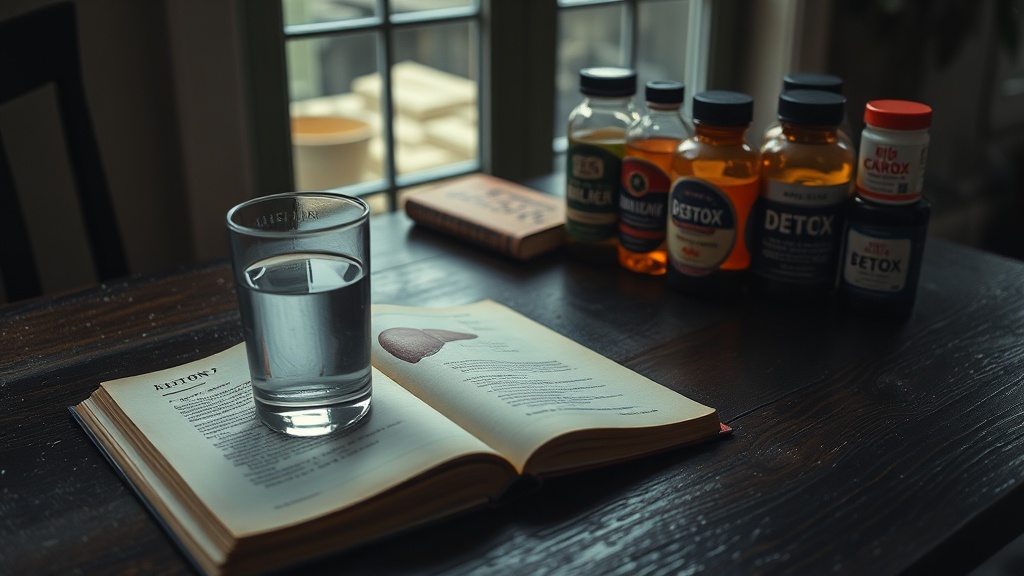
The Spring Detox Trap: What Your Liver Actually Needs (Spoiler: Not Herbs)

Every March, without fail, my inbox fills with some version of this: "Sloane, I found this amazing spring liver cleanse. It's 14 herbs, costs $89, and it flushes all the toxins you build up over winter. Should I do it?"
I've answered this question more times than I can count. So let me just write it down once and point everyone here.
No. You should not do the $89 spring liver cleanse. Here's why.
Your Liver Is Already Detoxing. Right Now. While You Read This.
Before we talk about anything sold in a capsule, we need to get clear on what "detoxification" actually means—because the wellness industry has done a remarkable job of hollowing the word out.
Your liver performs somewhere between 500 and 700 functions, depending on how finely you want to parse them. Among the most critical: it processes everything that enters your bloodstream—nutrients, medications, alcohol, metabolic byproducts, environmental compounds—and prepares them for elimination via bile or urine. Your kidneys filter an estimated 200 liters of blood per day, excreting waste continuously.
This is detoxification. It runs 24 hours a day. It does not take a month off in winter and "build up."
When wellness marketers say that toxins accumulate and need to be flushed, they are using a word with no clinical referent. They cannot tell you which specific toxins, in which measurable amounts, because there is no diagnostic test that shows "excess toxin load" in a healthy liver. If there were genuine toxin accumulation requiring intervention, that would be liver failure—a medical emergency treated in a hospital, not with a dandelion tincture.
This is not a controversial claim. The Mayo Clinic, the NIH, and every credible gastroenterology resource say the same thing: for people with healthy livers and kidneys, "detox" products have no demonstrated mechanism of action. Your organs are already doing the job. Telling your liver it needs to be "cleansed" is a bit like telling your lungs they need to be reminded to breathe.
Why Spring Is Prime Hunting Season for Detox Marketing
I'll be a little charitable here: I don't think everyone selling spring cleanses is malicious. Some genuinely believe it. But the timing is calculated, whether consciously or not.
March is a vulnerable moment. You've got:
New Year resolution fatigue. People who committed to big health changes in January have mostly fallen off. They want a reset, a second chance. "Spring cleanse" is a fresh-start narrative with a seasonal hook.
Post-winter sluggishness. Less daylight, less movement, heavier food, more alcohol for many people. The feeling that something should change is real and reasonable. That instinct is legitimate feedback from your body. The solution being offered just isn't what the feedback is asking for.
Deep cultural resonance. Spring purification rituals go back thousands of years across cultures. The wellness industry didn't invent the desire—it monetized it. There's something genuinely human about wanting to mark a seasonal shift with an intentional act of renewal. It's just that buying a 14-herb kit is a way of outsourcing that impulse to a checkout cart.
Peak algorithm. Detox content gets engagement in March. It gets recommended. You will be served more of it, repeatedly, until it starts to feel like common knowledge—and then common sense.
The Part That Actually Worries Me

Here's where I have to stop being gently exasperated and be direct, because this isn't only about wasted money.
Some herbs commonly found in "detox" and "liver cleanse" blends carry documented safety concerns—hepatotoxicity risks, nephrotoxicity, or drug interaction profiles worth taking seriously.
Kava — Well-documented risk of hepatotoxicity, particularly with alcohol co-use. The FDA has issued formal warnings. Still shows up regularly in "calming cleanse" and "stress detox" blends.
Comfrey — Contains pyrrolizidine alkaloids, which are directly liver-toxic with cumulative exposure. Internal use has been banned or restricted in several countries. Still found in some herbal products.
Greater Celandine — Compounds with hepatotoxic potential. Isolated cases of liver injury appear in the published literature going back to the 1990s; the evidence base is limited, but it's there.
High-dose dandelion root — This one surprises people, because dandelion is a lovely herb in culinary amounts. In the concentrated extract doses used in cleanse products, it becomes a significant diuretic and can strain kidney function in people with existing kidney disease or in those taking diuretics or lithium. The herb isn't inherently dangerous; the dose and context are the variable.
Milk thistle (silymarin) — And here I want to be genuinely nuanced, because this one has the most credible research behind it of anything in this category. Some reasonably well-designed trials suggest possible benefit in alcoholic liver disease and certain types of toxic hepatitis, and there's mechanistic research on hepatoprotective effects. The evidence is more meaningful than most supplements in this space, which is why I take it seriously rather than dismiss it.
That said, milk thistle in vitro inhibits certain cytochrome P450 enzymes. Whether this translates to clinically significant drug interactions at typical supplemental doses is genuinely debated—some studies show minimal real-world effect, others flag potential relevance for narrow-margin drugs. The honest answer is that we don't have clean data for all drug combinations. If you're on statins, blood thinners, certain psychiatric medications, or chemotherapy agents, this is worth a specific conversation with your prescriber—not because the risk is definitively established, but because the uncertainty is real enough to warrant the five-minute conversation.
The bigger issue isn't milk thistle in isolation. The issue is that "spring detox blend" is not a context in which dose, drug interactions, or individual health history are being assessed. It's a context where someone bought a product off an affiliate link and is now drinking three cups of it daily because they want to feel better.
What Your Liver Actually Needs
I know this section is less satisfying than a 12-herb cleanse ritual. Here it is anyway.
Sleep. There's reasonable evidence that liver tissue repair and metabolic processing follow circadian rhythms—animal studies link hepatic cell turnover to sleep-wake cycles, and chronic sleep disruption is associated with impaired metabolic and liver function markers. The human mechanistic research is still developing, and I won't overstate it. What I'll say is: if you feel like you need a reset after a hard winter, your sleep quality is a better first question than your supplement stack.
Hydration. Your kidneys need adequate water to do their work. Not expensive water. Not alkaline water with added minerals. Just water, in adequate quantity. Most adults fall short of this chronically.
Meaningful reduction in alcohol. Alcohol is the primary dietary driver of liver damage in people without metabolic disease. If you want to do something genuinely beneficial for your liver this spring, this is it. Even a few weeks of reduced consumption gives your liver measurable recovery time.
Fiber and whole foods. Your gut microbiome plays a real role in what gets absorbed versus processed through to the liver. A fiber-rich diet—vegetables, legumes, whole grains—supports microbial diversity that matters here. This is not a detox. It is food.
Movement. Exercise reduces non-alcoholic fatty liver disease risk and improves metabolic function. The evidence is solid. The prescription is not an influencer's program; it's a 20-minute walk.
If you want herbs specifically—and I think there are good reasons to reach for them in the right context—milk thistle has the most honest evidence base for people with documented liver stress (not healthy livers in "cleanse" mode). NAC (N-acetylcysteine) has some research behind it for liver support and oxidative stress, particularly post-injury. Both warrant a practitioner conversation if you're on any medications.
How to Spot Detox Marketing Before It Costs You
I've been tracking this content for years. The patterns are consistent.
Vague language about toxins. If the marketing can't name which toxins, in what measurable amounts, detected by what test, it's not science. "Accumulated winter toxins" is not a diagnosis.
Urgency plus seasonality. "Spring cleanse NOW before the window closes" is a sales mechanism, not a health protocol. The window doesn't actually close.
The supplement stack. One product is never sufficient. The detox always requires a kit—the cleanse capsules, plus the probiotic, plus the liver tincture, plus the collagen. Watch the cart total climb.
Endorsement without credential. I have nothing against influencers. But "a 27-year-old wellness creator looks radiant and takes this supplement" is not evidence of efficacy. It's an association you're being invited to buy.
The before/after bloat photos. Reduced bloating in a 72-hour "cleanse" is often explained, at least in large part, by reduced sodium intake and increased water consumption—both of which happen naturally when people start paying close attention to what they're eating. The herbs in the protocol may not be doing the work people assume.
If You Want the Ritual
I understand the impulse to mark a transition with something intentional. Humans are seasonal creatures and there's nothing wrong with that instinct.
So here's a spring ritual that won't cost you $89 or stress your kidneys: go outside in the morning light. Eat something that came from a plant recently. Drink more water than you have been. Sleep an extra hour. If you've been using alcohol as a comfort mechanism through a long winter, take a break and notice how you feel.
These interventions have documented physiological mechanisms. They're free or nearly so. And they're what your liver is actually asking for.
I started this blog after seeing a viral detox recipe that could cause a cardiac arrhythmia in people with certain conditions. That's still why I'm here—to be the place that says "wait, let's look at the actual research first" before you spend money or, worse, do harm. Your liver has been working hard for you. Give it what it needs: rest, water, a break from alcohol, and time. That's not a sellable protocol. But it's the true one.