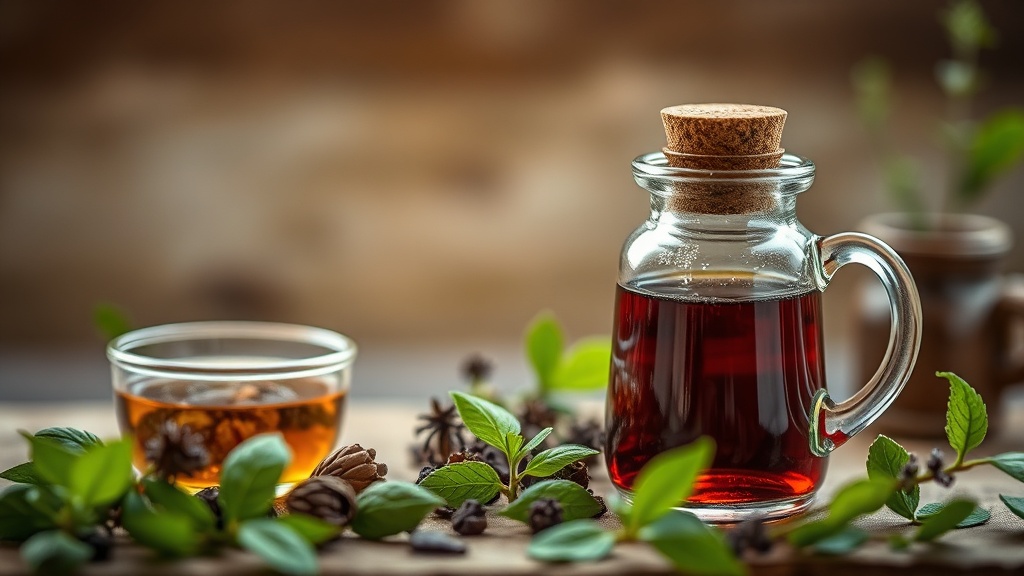
Why Herbal Tinctures Aren't Always Stronger Than Teas

Here is something that might upend what you have heard at every herb shop and wellness expo: a well-prepared cup of chamomile tea can deliver higher concentrations of certain active compounds than a commercial tincture sitting on the same shelf. This is not heresy—it is extraction chemistry. And if you have been automatically reaching for dropper bottles while ignoring your teapot, you might be shortchanging your herbal routine.
This post unpacks when alcohol-based preparations genuinely outperform simple infusions—and when they do not. We will look at solubility science, bioavailability research, and the specific herbs that actually perform better in hot water. By the end, you will know how to match your preparation method to your wellness goal instead of defaulting to the most expensive option.
What Makes a Tincture "Stronger" Anyway?
The assumption that tinctures are universally more potent comes from a kernel of truth. Alcohol is an excellent solvent for many plant compounds—particularly alkaloids, resins, and certain glycosides that do not dissolve well in water. When you soak willow bark in vodka, you extract salicin (a precursor to salicylic acid) more efficiently than you would with a brief hot water steep. For resinous herbs like myrrh or frankincense, alcohol is practically mandatory; water simply bounces off those sticky, aromatic compounds.
But "stronger" is a slippery word. A tincture might pack more milligrams of certain compounds per milliliter, but quantity is not the same as bioavailability or therapeutic effect. Your body absorbs some phytochemicals better in aqueous solution. Others degrade in alcohol over time. And some herbs contain a spectrum of actives—water-soluble polysaccharides alongside alcohol-soluble bitters—that no single extraction method captures completely.
The concentration advantage also depends heavily on preparation quality. Commercial tinctures vary wildly in herb-to-solvent ratios. A 1:5 tincture (one part herb to five parts liquid) is standard but hardly concentrated. Meanwhile, a strong decoction—simmering roots or bark for twenty minutes—can achieve extraction rates that rival or exceed weaker tinctures for water-soluble constituents. The devil is in the dosage math and the chemistry of the specific herb.
When Do Teas Actually Deliver More Active Compounds?
Water is not the weak solvent it is often portrayed to be. Hot water excels at extracting polysaccharides, certain flavonoids, and volatile oils—the very compounds that give many herbs their soothing, immune-modulating, or digestive properties. Research published in the Journal of Ethnopharmacology has shown that hot water extracts of echinacea root retain higher levels of immunomodulatory arabinogalactan proteins compared to alcohol preparations. Your immune cells care about those polysaccharides—and they are drinking from the teacup, not the dropper.
Marshmallow root presents another clear case. The soothing, mucilaginous properties that make this herb famous come from complex carbohydrates that swell in water. Alcohol precipitates these slimy compounds, rendering them ineffective. A cold or hot infusion of marshmallow root produces a thick, gel-like liquid that coats irritated mucous membranes; a tincture yields little more than flavored alcohol. If you are seeking digestive or respiratory relief, the tea is not just gentler—it is chemically superior for the intended purpose.
Volatile oils—responsible for the calming effects of chamomile, lemon balm, and peppermint—also tell an interesting story. Alcohol can extract these aromatic compounds, but heat and water work synergistically to release them from plant tissues while preserving their delicate structures. A covered cup of chamomile tea captures steam-distilled essential oils that would evaporate during tincture production. When you inhale that floral steam and sip the warm liquid, you are receiving a broader spectrum of actives than a tincture typically provides.
Even with antioxidant-rich herbs like green tea and hibiscus, hot water often outperforms alcohol extraction for specific catechins and anthocyanins. The catechin EGCG—heavily researched for cardiovascular support—extracts efficiently in water heated to 80-90°C. While alcohol tinctures of green tea exist, they are niche products for a reason: traditional preparation methods evolved to match extraction chemistry to human consumption patterns.
Which Preparation Method Should You Choose for Specific Herbs?
Matching herb to preparation requires looking at the primary actives and your therapeutic goal. For herbs rich in tannins—think black tea, oak bark, or witch hazel—both water and alcohol work, but the resulting products behave differently. A strong tea delivers immediate astringency useful for acute conditions like diarrhea or skin inflammation. A tincture concentrates those tannins for longer-term use or external applications. Neither is objectively "better"; they serve different purposes.
Bitter herbs—gentian, artichoke leaf, dandelion root—almost always perform better as tinctures. Bitter compounds (sesquiterpene lactones, iridoid glycosides) extract well in alcohol and trigger the bitter taste receptors that stimulate digestion. A tea of these herbs is often so unpleasantly bitter that people cannot drink enough to achieve therapeutic effect. The small dose of a concentrated tincture bypasses the palate issue while delivering the chemical signal your digestive system needs.
Mineral-rich herbs like nettle, oat straw, and red clover pose an interesting dilemma. These plants contain calcium, magnesium, and silica in forms that extract gradually in hot water over hours. A strong overnight infusion (essentially a very long tea) yields impressive mineral content. Alcohol extracts fewer minerals; they simply are not soluble in ethanol. If your goal is nutritional support rather than phytochemical extraction, the long infusion wins decisively over any tincture.
Practical Guidelines for Your Herb Cabinet
Consider keeping dual preparations for versatile herbs. Echinacea works well as a tea for immune support during colds, but an alcohol tincture offers convenience for travel and longer shelf life. Ginger functions beautifully both ways—fresh ginger tea for immediate nausea relief, ginger tincture for on-the-go digestive support. The flexibility matters more than declaring one method supreme.
Freshness and quality often trump preparation method. A recently dried, properly stored chamomile flower made into tea will outperform a years-old, poorly stored tincture of the same herb. Pay attention to color, aroma, and source. Bright, fragrant dried herbs suggest active constituents remain intact. Faded, dusty material—whether destined for tea or tincture—has already lost much of its value.
Cost considerations are legitimate too. Quality tinctures require substantial plant material, alcohol, and time to produce, driving prices upward. Teas and infusions let you control quality and quantity at lower cost per dose. For daily tonics like nettle or red clover that you consume regularly, the economics of bulk dried herbs versus bottled tinctures become significant over months of use.
Your body's preferences matter as well. Some individuals find alcohol-based preparations irritating to the gut or incompatible with medications. Others dislike the volume of liquid required for therapeutic tea doses. Honoring these practical constraints ensures consistency—and consistent use matters more than theoretical optimization. The best preparation is the one you actually take.
What Does the Research Actually Say About Absorption?
Bioavailability studies add another layer of complexity. Research from pharmacokinetic investigations of herbal compounds shows that extraction method affects not just what is present in the preparation, but how your body processes it. Water-soluble flavonoids from tea extracts often show rapid absorption and urinary excretion—useful for acute antioxidant effects. Alcohol-extracted compounds may demonstrate slower, steadier blood levels over time.
The food matrix matters too. Taking bitter tinctures in a small amount of water before meals—classic digestive protocol—delivers different absorption kinetics than swallowing the same dose with a full meal. Polyphenol absorption from tea changes based on whether you add milk, lemon, or consume it plain. These interactions remind us that herbal preparation extends beyond the kitchen or apothecary into the context of consumption.
Traditional use patterns often reflect empirical bioavailability wisdom. Ayurvedic practitioners have long emphasized anupanas—delivery vehicles like warm water, honey, or ghee that modify how herbs act in the body. Western herbalism's distinction between teas, tinctures, and syrups serves similar purposes. These traditions encode generations of observation about which preparation methods produce reliable clinical results for specific conditions.
"The question is not whether tinctures are stronger than teas, but whether your preparation method matches the chemical profile of your herb to the physiological response you seek."
Understanding solubility does not require a chemistry degree—just curiosity about why traditional methods evolved the way they did. When you grasp that marshmallow's mucilage demands water while echinacea's alkylamides prefer alcohol, the preparation choice becomes obvious. This knowledge protects you from marketing claims about "maximum strength" products that ignore basic extraction science.
Your herbal practice benefits from both approaches. Keep quality tinctures for convenience, travel, and resinous or bitter herbs. Maintain a selection of dried herbs for teas, infusions, and decoctions—especially for mucilaginous, mineral-rich, or aromatic plants. Learn to read your herbs: are they sticky, fragrant, fibrous, or mineral-dense? These physical characteristics hint at their preferred solvent. The goal is not loyalty to one method but fluency in matching preparation to purpose.