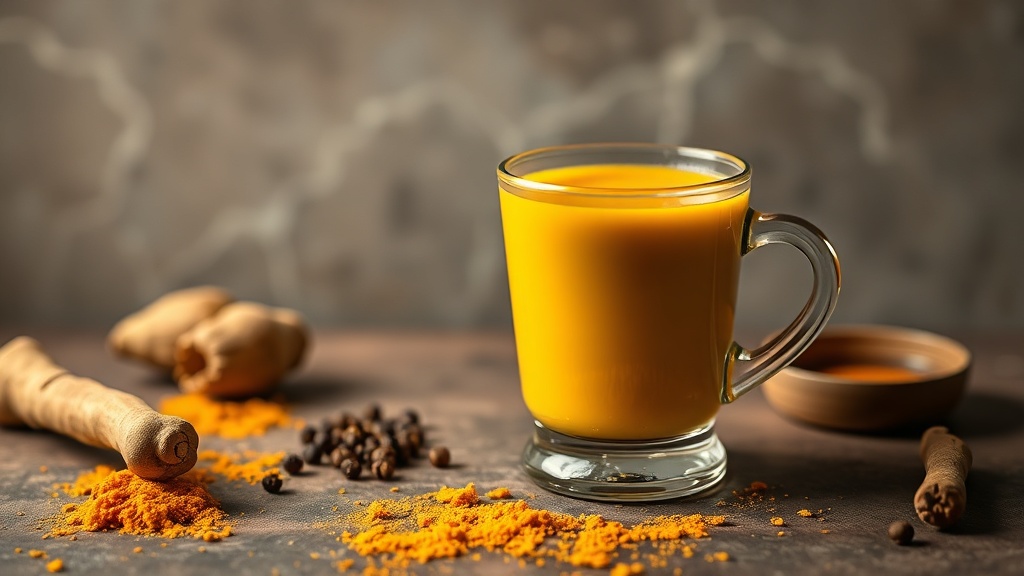
Brewing a Golden Cup of Turmeric and Black Pepper Milk

In this guide, you'll learn how to prepare a scientifically effective turmeric and black pepper milk, the specific role of piperine in absorption, and how to choose high-quality ingredients for your kitchen pantry. We'll look at the chemistry behind the recipe so you aren't just drinking yellow milk, but actually making a functional beverage.
Why Does Turmeric Need Black Pepper?
Turmeric requires black pepper to increase the bioavailability of its primary active compound, curcumin. Without the presence of piperine—the alkaloid found in black pepper—the body struggles to absorb curcumin effectively. Research shows that piperine can increase curcumin absorption by up to 2,000%.
It's not just about adding a dash of spice for flavor. This is pure chemistry. Curcumin is notoriously difficult for our systems to process on its own. It's fat-soluble, meaning it needs a lipid (a fat) to be absorbed, and it's rapidly metabolized and excreted by the body. Adding black pepper acts as a biological "key" that slows down the metabolic processes that would otherwise flush the curcumin out before it can do its work.
I often see people buying expensive turmeric supplements only to wonder why they don't feel any different. Usually, it's because they skipped the fat or the pepper. (It's a common mistake, even among wellness enthusiasts.)
The Science Check: According to the Wikipedia entry on Curcumin, the synergy between these two substances is well-documented in pharmacological studies. You aren't just following a trend; you're following biological evidence.
What Are the Best Ingredients for Golden Milk?
The best ingredients for golden milk are high-quality organic spices and a healthy source of fat. While you can use whatever is in your cupboard, the quality of your turmeric determines the concentration of curcumin available to you.
Here is a breakdown of what to look for when shopping:
| Ingredient | What to Look For | Why It Matters |
|---|---|---|
| Turmeric | Organic, whole root or high-curcumin powder | Higher curcumin content means more efficacy. |
| Black Pepper | Freshly cracked peppercorns | Freshly ground pepper contains more potent essential oils. |
| Milk Base | Full-fat coconut milk or grass-fed dairy | Curcumin needs fat to dissolve and enter the bloodstream. |
| Sweetener | Raw honey or maple syrup | Avoid refined sugars to keep inflammation low. |
I personally prefer using a brand like Spice Island for my ground spices because their turmeric is vibrant and potent. If you're using fresh root, make sure it's firm and bright orange inside. If it's soft or mushy, skip it.
If you find the flavor of turmeric a bit too earthy or "medicinal," you might enjoy pairing it with a sweeter profile. If you're looking for something more botanical, you might find interest in soothing your digestive rhythm with hibiscus and fennel, though the flavor profiles are quite different.
How Do You Make Turmeric Milk at Home?
To make golden milk, you must gently heat your milk with turmeric, black pepper, and a fat source to ensure the spices are fully integrated. This process is called decoction, and it's the most effective way to prepare herbal infusions.
Follow these steps for a single, perfect serving:
- Heat the Liquid: Pour 1 cup of your chosen milk (coconut milk works beautifully here) into a small saucepan over medium-low heat.
- Add the Spices: Add 1/2 teaspoon of turmeric powder and a generous pinch of freshly ground black pepper. A tiny bit of ground ginger can also add a nice warmth.
- Incorporate Fat: If you aren't using a full-fat milk like coconut milk, add 1 teaspoon of coconut oil or ghee. This is non-negotiable for absorption.
- Simmer: Let the mixture simmer gently for about 5 to 10 minutes. Do not let it come to a rolling boil; you want to gently "steep" the spices, not burn them.
- Sweeten and Serve: Remove from heat. Stir in a teaspoon of raw honey or maple syrup once the liquid has cooled slightly (this preserves the enzymes in the honey).
It's important to remember that heat is your friend here. You aren't just making a drink; you're extracting the properties of the plant. A lukewarm milk won't give you the same results as a properly simmered one.
Is Turmeric Safe for Everyone?
Turmeric is generally safe for most people when consumed in culinary amounts, but it can interact with certain medications. If you are taking blood thinners or have gallbladder issues, you should consult a medical professional before significantly increasing your intake.
Because turmeric can have a mild blood-thinning effect, it's a good idea to be cautious if you're scheduled for surgery. This isn't to say you should avoid it entirely, but rather to be aware of how it interacts with your specific biology. I'm a clinical herbalist, not a doctor, so please treat this as educational information rather than medical advice.
If you're looking for a different kind of botanical ritual, you might explore a gentle lift with lemon balm tea. It's a much lighter experience compared to the heavy, warming nature of golden milk.
One thing to watch out for is the "staining" factor. Turmeric is a powerful natural dye. It will stain your wooden spoons, your white countertops, and your fingers. If you're precious about your kitchenware, be careful during the simmering process!
The beauty of this recipe is its simplicity. You don't need a degree in chemistry to make it, but understanding the "why" behind the black pepper makes the ritual much more intentional. It turns a simple beverage into a functional tool for your wellness routine.
Steps
- 1
Warm your milk of choice in a small saucepan.
- 2
Whisk in turmeric, ginger, and a pinch of black pepper.
- 3
Simmer gently for five minutes to activate the spices.
- 4
Sweeten slightly with honey and pour into your favorite mug.